


About NeMe
https://www.neme.org/about
NeMe (/ˈniːm/) is a Limassol based non-profit, Cyprus-registered cultural NGO founded in November 2004. NeMe focuses on contemporary theories and their intersection with the arts. Its programme, champions art and tech intersections, hosting bold exhibitions and talks, and fosters critically engaged art explorations in Cyprus.
NeMe operates as a dynamic platform for cultural production, research, and dialogue, emphasising the role of art in addressing urgent societal, environmental, economic, and technological issues. It is dedicated to fostering critical, interdisciplinary, and socially engaged artistic practices that intersect with contemporary theory and emerging technologies.
Mission and Focus
NeMe’s core mission focuses on promoting critical media and technologically informed arts practices that challenge traditional boundaries between creative and scholarly work. NeMe’s programme is supported by an open access publishing ethos, promoting the interdisciplinary nature of its projects and providing context for the ideas behind them.
NeMe is particularly interested in digital media, intermedia, experimental formats, and emerging art forms that interrogate themes such as social change, the infosphere, marginalised communities, and the environment.
NeMe is dedicated to supporting non-commercial events and prioritises intergenerational and transdisciplinary engagement, aiming to build extensive networks for collaboration and transnational mobility within the cultural sector and it advocates for open, collaborative methodologies and maintains an open-access publishing ethos to contextualise and disseminate the ideas behind its projects.
Physical Space and Programming
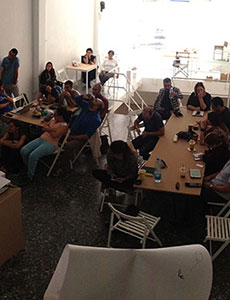
The NeMe Arts Centre (NAC), established in 2014, serves as the organisation’s permanent physical hub located at the corner of Ellados and Enoseos streets 3041, Limassol.
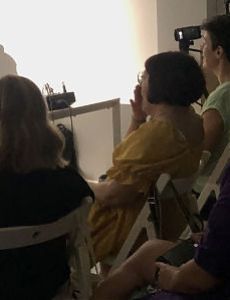
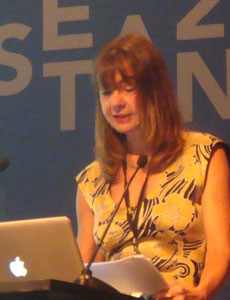
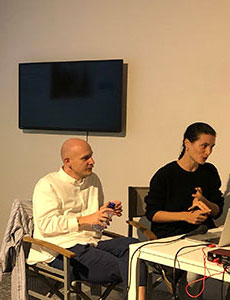
The space hosts a diverse range of activities, including exhibitions, performances, screenings, workshops, conferences, seminars, artist talks, and lectures.
Residency Program
Since 2006, NeMe has run a residency program for artists, researchers, writers, and scholars. The residency duration varies and participants are expected to complete a new work and present their research outcomes through a talk, performance, screening, or exhibition at the NeMe Arts Centre.
Past residents include Dr Lanfranco Aceti (IT), George Alexander (AU), James Bridle (UK), Dr Nico Carpentier (BE), Iliada Charalambous (CY/NL), Ruth Catlow (UK), Régine Debatty (IT), Marie Gaulis (CH), Nina Czegledy (US), Dr Marc Garrett (UK), Dr Aycan Garip (CY), Dr Inès Gaulis (CH), Srećko Horvat (HR), Sanela Jahić (SI), Nurtane Karagil (CY), Ernest Larsen (US), Dr Rosemary Lee (US/PT), Dr Marc James Léger (CA), Dr Areti Leopoulou (EL), Maya Linden (AU), Dr Garrett Lynch (IRL) (IE), Peter Lyssiotis (AU), Rosa Menkman (NL), David McMinn (AU), prof. Sherry Milner (US), Jonathan Munro (UK), Dr Paul O’ Neill (IE), prof. Sheila Pinkel (US), Ozden Sahin (TR), Dr Cayley Sorochan (CA), Carmen Salas Pino (ES), Frank Sweeney (IE), prof. George Tsaras (EL), Geert Vermeire (BE), Dr Iannis Zannos (EL).
Activities and Collaborations
NeMe has been an active participant in international discourse on art and technology. Among its many projects on the subject, it participated in the Creative Europe funded projects State Machines (2017-19), A Sea Change (2022-24), the COST funded project Toolkit of Care (2022-26), and in 2023, it organised MoneyLab#13, a conference and exhibition examining the intersections of emerging technologies and economic systems, focusing on blockchain, DAOs, NFTs, cashless societies, central bank digital currencies (CBDCs), and sustainable revenue models for the arts.
NeMe became a member of the European Media Art Platform (EMAP) in 2022, further solidifying its role in the international media art network.
NeMe’s network exceeds 200 organisations worldwide and to date we forged collaborations for projects we co-developed with Aksioma, Ljubljana, Slovenia; Antre Peaux, Bourges, France; Ars Electronica, Linz, Austria; Chroniques, Marseille, France; CIKE, Košice, Slovakia; Cyprus University of Technology, Limassol; Drugo More, Rijeka, Croatia; Ekaterinburg Museum of Fine Arts, Russia; FACT, Liverpool, UK; Furtherfield, London, UK; gnration, Braga, Portugal; Heidelberger Kunstverein, Germany; IFA, Berlin, Germany; Hexagram, Montréal, Canada; HONF, House of Natural Fibres, Yogyakarta, Indonesia; iMAL, Brussels, Belgium; Impakt, Utrecht, The Netherlands; Insitute of Network Cultures, Amsterdam, The Netherlands; Kersnikova Institute, Ljubljana, Slovenia; Kontejner, Zagreb, Croatia; LABoral, Gijón (Asturias), Spain; Lanitis Foundation, Limassol, Cyprus; m-cult, Helsinki, Finland; MEET, Milan, Italy; MoMUS, Thessaloniki, Greece; NCCA, Ekaterinburg, Russia; NCCA, Moscow, Russia; Nicosia Municipal Arts Centre, Cyprus; Onassis Stegi, Athens, Greece; Quo Artis, Barcelona, Spain; Rialto, Limassol, Cyprus; RIXC Centre for New Media Culture, Riga, Latvia; The Thursday Club, Goldsmiths, University of London, UK; University of Nicosia, Cyprus; Ural State University, Ekaterinburg, Russia; Vrije Universiteit Brussel, Brussels, Belgium; Werkleitz, Halle (Saale), Germany; WRO Art Center, Wroclaw, Poland.
From 2013 to 2016, cohering to one of our aims to support young cultural workers, NeMe was the hub organisation for the Cyprus representation of the now defunct European Cultural Parliament Youth Network.
Governance and Advocacy
NeMe has not shielded from cultural policy advocacy. Since 2020, it united at least 45 other Cypriot cultural organisations leading open discussions and jointly submitting co-authored and co-signed letters outlining crucial concerns about the insufficiency of sustainable governance, funding, and decision-making in the national cultural sector.
Digital Presence and Outreach
NeMe maintains an active online presence through its website, a newsletter, as well as social media platforms including Facebook, Instagram, Bluesky, X, Mastodon, YouTube, and Vimeo.
Impact methodologies
Beyond our quantitative statistics, NeMe measures the impact of our initiatives through the use a comprehensive framework which values qualitative approaches rather than rigid quantitative metrics, but we do keep records for both. We assess our effectiveness by
- recognising uncertainty and innovation as integral to impact creation;
- measuring the audience numbers of our events;
- observing longitudinal evaluation of changes in public perception, discourse generated, and cultural dialogue resulting from our exhibitions, performances, seminars, and conferences via a bespoke online form, publicly available in our space during our events;
- observing and evaluating how new ways of thinking, influence creative practice and its artistic quality in Cyprus;
- organising workshops which allows us to analyse intended vs. actual affects to refine goals and methodologies. This approach acknowledges that theoretical, artistic, and technological work often has ripple effects beyond their immediate outcomes and promotes an open, adaptive process rather than fixed metrics;
- developing methods and indicators to observe and measure impact over time;
- reflecting on outcomes relative to original goals to generate insights;
- measuring impact at individual, community, and systemic levels;
- affecting public or political debate, challenging established norms, modes of thought or practices;
- influencing policy, professional practice, and regulations on a national level, to improve conditions for NGOs and artists;
- measuring the audience growth in our social media accounts, and newsletter;
- the quality and quantity of citations to our content and mentions of our work in international journals and books.